
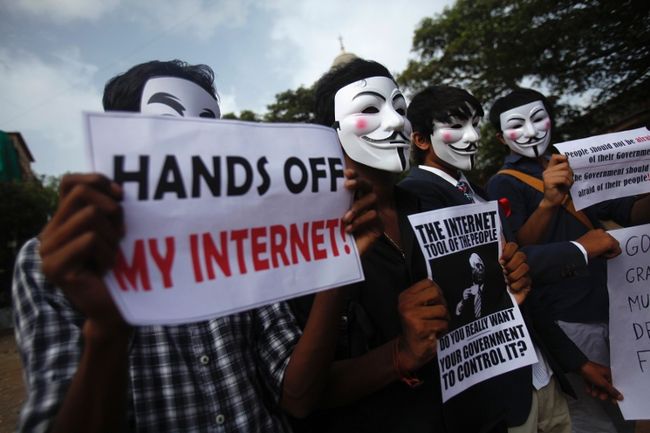
Some people might say that considering the potential challenges, it’s somewhat impossible to switch to a digital democracy. On top of the established powers that might oppose such changes, there’s also other important considerations one needs to take into account, such as economic stability and national security.Because of reasons like this , I would say one would need to start small. Implementing a digital democracy on a municipal level, rather than on a federal level, might be a lot easier to realise at first. Plus it seems like a good idea to try it on smaller scale in order to work out any potential bugs in the system.
PART 1 Upgrading your gov-system on a municipal level
To start, one would have to create an organization, recruit some members and raise some funds. Afterwards, since most municipal governmental systems are regulated on a provincial/state level, one would have to verify with those authorities to see if their existing rules prevent the switch to a digital democracy on a municipal level. If any such hurdle exist, provincial/state representatives would have to be solicited until the rules are changed. Once you’re in the clear with them, the real work starts. You find an ideal municipality, you get your organization recognized as a municipal political party and then you run for mayor. You run with the platform “Elect the last mayor that’ll take decisions for you” or something similar. Now, if enough councillors from your party got elected, as mayor you’ll be able to push the reform thru that switches the existing system over to a digital democracy pretty easily. Ideally you also have enough budget to create a municipal government portal that local citizens can access with their smartphones and personal computers in order to truly participate in the process. And it doesn’t necessarily have to be that citizens have to vote on every single law project and initiative. For the non-controversial stuff, like renewing the budget for garbage pick-up and such, well in cases like that you might have councillors/moderators that can take care of it. But when there’s a controversial issue that arises, like, let’s say, building a highway on a haunted indian graveyard, then the electorate can log on and decide the issue for themselves, with the councillors/moderators playing a role that’s more about moderating the debate than imposing their view.
One might say that this is unlikely to ever happen. But you never know. There’s small towns and villages out there, that are losing their population and are unable to find a mayor. A partnership between a political organization and an ISP, could come in, hook everyone in town to hi-speed internet, and at the same time give them access to an online voting system. And with what’s happening in a lot of small towns, I don’t think it would be too hard to find one that’s willing to have all that influx of funds, technology and resources come in into their borough. Once most of the bugs within the system have been worked out, one can then move ahead to try to apply what’s been learned to a higher level of government.
Part 2 Upgrading your gov-system on a provincial/state/federal level
This, I think, would be a lot trickier. The analogy that comes to mind for that one, is to view your government like it’s a sound system. There’s a dial for democracy on it, and it goes from zero to ten. Right now, I would say that most free countries have their “democracy-volume” set between 2.5 to 3.5, and obviously raising it at 10 all of a sudden could create quite a bit of a commotion. But if we raised it to 5 , which would be a government system peppered with a little more transparency and real-democracy, I don’t think there would necessarily be riots in the streets and economic collapse and such.
But yeah, since the stakes are higher on a provincial/state/federal level, one would be wise to proceed with baby steps. To start, you recruit members, register your organization as a political party.For argument’s sake let’s call it the Technodemocrat party. And then you run for a seat. In the off-chance your party wins more seats and gains control of your government, then you won’t have a hard time pushing for a full digital-democracy reform. But in the most likely scenario, the one in wich you’re the only member of your party elected, you can still promote the digital democracy agenda by leading by example. It’s simply a question of holding a poll, survey or referendum in your district every time you’re asked to vote as an independant.Then you vote as your district wants you to vote. And in that sense, you would actually be living up to the term “representative”.
And ultimately, maybe we don’t need a full on digital democracy, maybe if we’re lucky, maybe the threat of such a movement gaining a foothold, will be enough to scare the powers that be into increasing the democracy-volume of our governments by 0.5 . Just enough for us to have a just little more transparency and representation for our money…
[n]


![[ hungry-kitty ]](https://technology4democracy.com/wp-content/uploads/2012/12/hungry-kitty.jpg?w=500&h=380) It’s a common counter-argument. Not biting hands that feed, is about not going against the people or institutions that have allowed us to get to where we are right now. In our case it’s about not completely trashing the existing system that allowed to get to the point where we’re able to create a newer, better system.
It’s a common counter-argument. Not biting hands that feed, is about not going against the people or institutions that have allowed us to get to where we are right now. In our case it’s about not completely trashing the existing system that allowed to get to the point where we’re able to create a newer, better system.![[ - statement - ]](https://technology4democracy.com/wp-content/uploads/2012/12/statement1.jpg?w=150&h=65)







![[ I recruit YOU ] 3](https://technology4democracy.com/wp-content/uploads/2012/05/i-recruit-you-3.jpg)
![[ YOU ] 3](https://technology4democracy.com/wp-content/uploads/2012/05/you-3.jpg?w=150&h=70)





 technology4democracy
VIDEOGAME SEGREGATION
I think there’s nothing worse than hanging out at friend’s place who only has 1-Player adventure/shooter games. It doesn’t make for much 2-player interactivity. I buy multiplayer games, including Capcom fighting games, because, as silly as it sounds, I want to be a good host. Plus, obviously, I enjoy playing them tremendously. I love the Capcom fighting games so much, I’ll buy everything Capcom produces that’s got a versus option. From SF2 on SNES, to Jojo’s Bizarre Adventure on PS1, To buying games on PS3 that I already have on Ps2. Capcom fighting games are like pokemons to me. I want them all! See photographic evidence below:
Now back to the point I want to make about Videogame Segregation.
Traditionally segregation is defined as:
*source: dictionary.com
I love all the capcom fighting games, but with all the updates and different editions, I’m hooked beyond my budget. And what really irks me is how they segregate their online gamer community between different versions of the same game. For example: last time I checked, Street Fighter 4 had sold around 4-5 million copies, and because there’s so many copies, and because it’s available dirt cheap used, most of the people online are noobs. So I can win online matches at SF4 without too much work even though I usually take “random” at the character select screen. The newer edition, Super Street fighter 4 AE, which sold 1-2 million or so copies, is harder to find and is more expensive, so most of the people online for that game are hardcore. They’re hardcore enough to pay more for the same game, and hardcore enough to learn a newer more complicated move-set. I can’t afford to choose random when I play SSF 4AE online, no, I gotta stick to my strong characters and work hard for every win.
It’s segregation because it separates people into groups, based solely on their purchasing power and skills set. everybody should be able to play the best, and latest version of the game. And in my case, since I own both copies, I find it’s a downer that the community is split up like that, and that with my skill set, it’s not a fun option for me to play the latest version of Streetfighter. That strikes me as a design flaw on Capcom’s part, that they would split us up like that, that they would make the latest, and most updated version of their game, so unapproachable.
And Capcom keeps repeating the same pattern. They’re doing it to us again with Marvel Vs Capcom 3, and the newer version called: Ultimate Marvel vs Capcom 3. Yes, against my own personal logic, Capcom will ultimately get me to shell another 60$ for a newer version of the same game that now has a few new characters. Woo-hoo! And I wouldn’t mind paying 120$ for one game, if only the online offering wasn’t split into two absolutely polar-opposite groups.
So you end up with two segregated gaming communities for the same game. One for noobs, one for hard-core gamers. Which sucks, because everybody should be able to play the same game, the best version of the game. No gamer should be told to go sit at the back of the digital bus.
[n]
NATNOTE: For anyone who wants to call me out, and challenge me at SF4 on PS3, my PSN username is: Razorblade_Candy. And I’ll take on anybody online. Well, at least for a couple of matches… ^_^
Share this:
5 Comments
Posted in ANALYSIS, CHALLENGE, COMMENTARY, GAMING, TEXTUALS WITH VISUALS
Tagged Cammy White, CAPCOM, cashgrab, Chun-Li, darkstalkers, dreamcast, EYE NOTICE, getting screwed, Jojo's bizarre adventure, MvC 2, MvC 3, PS1, PS2, PS3, restaurant, rival schools, Ryu, SF X TEKKEN, SF4, SNES, SSF4, SSF4 AE, versus, videogame advocacy, videogame politics, videogame segregation, VS, X-MEN vs SF, [ YOU ]